How the Landscape Rock Calculator works
The calculator converts the rock layer into cubic yards, then multiplies by an editable tons-per-cubic-yard density. This lets the same tool work for lighter decorative stone and denser crushed rock.
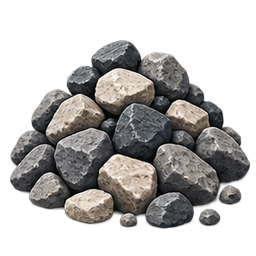
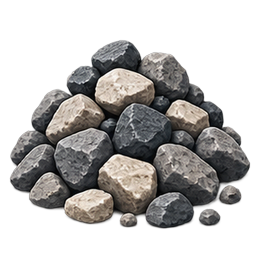
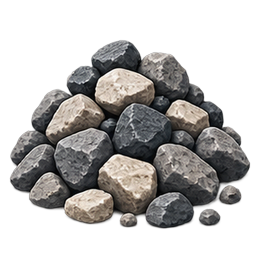
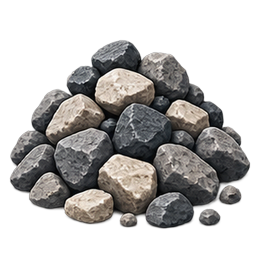
Calculate landscape rock in cubic yards and estimated tons from project length, width, depth, material density and extra allowance for grading and coverage.
Enter your measurements and material details.
Ask the supplier for the bulk density or typical tons per cubic yard of the exact rock.
The calculator converts the rock layer into cubic yards, then multiplies by an editable tons-per-cubic-yard density. This lets the same tool work for lighter decorative stone and denser crushed rock.
Measure the area to be covered and the finished compacted depth. For curves, split the bed into simple shapes. The density field should be replaced with a supplier value whenever possible.
It varies. A rough value may be around 1.2–1.5 tons per cubic yard, but supplier data is better.
Depth depends on stone size, use and base conditions; enter the depth you have chosen.
Yes if you enter the appropriate depth and density, though the gravel calculator is also available.
Only through the allowance you choose.
Different stone products have different bulk weights.
Using the example inputs shown in the calculator — Area length (ft) = 30, Area width (ft) = 10, Rock depth (in) = 3, Density (tons per yd³) = 1.35, Extra allowance (%) = 8 — the result is 4.05 tons. This demonstrates the formula with a complete set of numbers rather than a hidden assumption.
The result breakdown also shows Volume: 3 yd³; Density used: 1.35 tons/yd³. Replace the example values with field measurements and the exact product coverage, yield or package size you plan to buy.
For this landscape rock calculator, the inputs with the greatest practical effect are area length, area width and rock depth. Recalculate when any of those change; do not reuse a result from a different room, run, layer depth or product specification.
Landscape Rock Calculator is intended to help with quantity planning and arithmetic. It does not inspect the site, choose structural dimensions, determine code compliance or replace manufacturer installation instructions. Conditions such as slope, substrate quality, moisture, soil, framing, access and workmanship can change the final amount required.